 Bible Archivist
March 8, 2026 · John Adams
What Was the Last Supper Really Like? A Historical Guide
Explore the gritty historical reality of the Last Supper: a reclining triclinium meal with bean stew, haroset, and intimate seating in Jerusalem’s upper room.
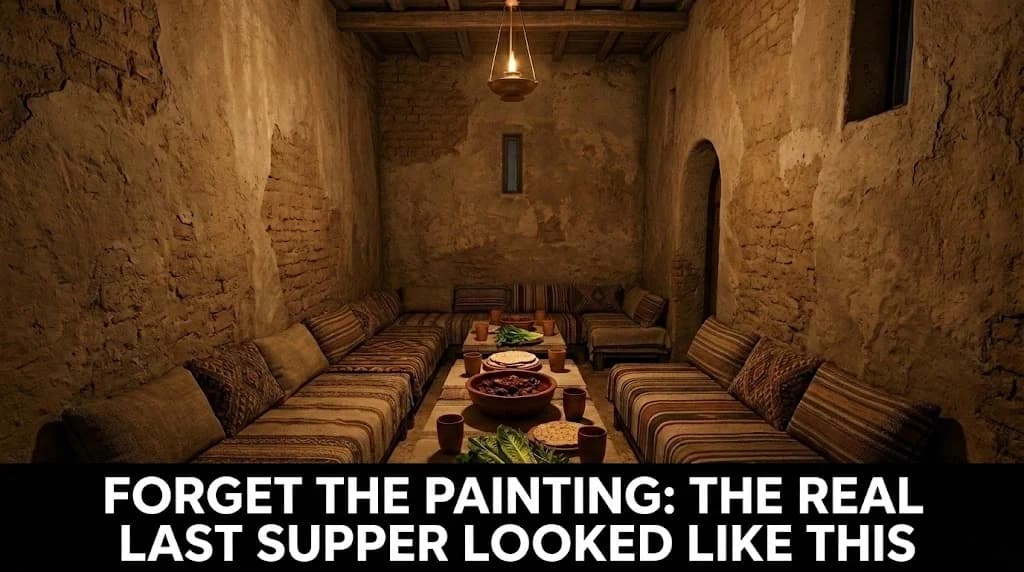
The Last Supper was a 1st‑century reclining meal (triclinium) featuring a menu of bean stew, lamb, and bitter herbs, held in a modest upper room, not at a long table.
Leonardo da Vinci’s “Last Supper” is the image everyone pictures when they think of Jesus’ final meal. Long table. Leavened bread. Dramatic light falling from unseen windows. But the actual event was a low‑key, cramped, reclining dinner in a Jerusalem upper room—nothing like the painting.
Da Vinci’s fresco dates from the 1490s, almost fifteen centuries after the fact, and his priorities were artistic drama and theology. This guide corrects that intent mismatch by returning to archaeology and contemporary sources.
The Seating: Why There Was No Long Table
The most persistent myth is the “long table.” Early Christian writers don’t describe one, and nothing in first‑century Judaea supports it.
What Is a Triclinium?
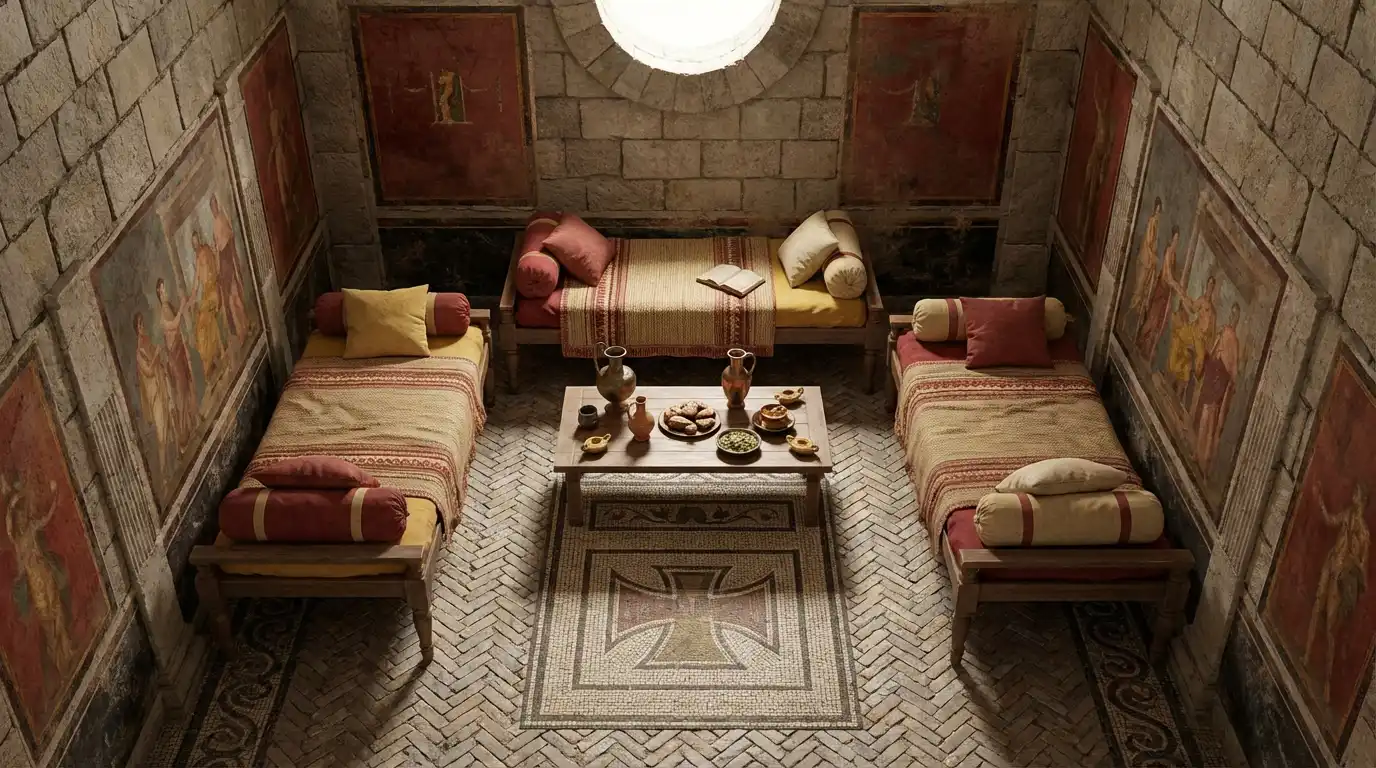
A triclinium was a U‑shaped arrangement of three low tables leaving one side open. Guests reclined on their left elbows on cushions, feet away from the table. This setup comes from Roman dining practices adopted by urban Jewish elites.
Reclining on Cushions
Reclining was a status symbol. Recliners held their wine cup in the right hand, bread in the left. Standing or sitting in chairs was for servants and children.
The Menu: What Was Actually on the Menu?
Biblical texts refer to bread, wine, lamb; archaeology gives us the rest.
Unleavened Bread and Bitter Herbs
Passover required matzah (unleavened flatbread) and maror (bitter herbs), typically horseradish or romaine lettuce.
Cholent, Lamb and Haroset
Cholent—a slow‑cooked stew of beans, barley and meat—would have been typical. Lamb or kid meat (not beef) was eaten. Haroset, a paste of dates and nuts, symbolized mortar.
Pottery and Calorie Counts
Excavated Judean stone vessels and clay cooking pots from 1st‑century Jerusalem indicate daily caloric intake around 2,200 kcal for a male adult—mostly from bread and legumes.
The Seating Chart: Who Sat Where?
The gospels hint at positioning.
Place of Honor and Betrayer’s Spot
In Luke, Jesus “placed his disciples at table, taking the place of honor.” John 13:23–26 mentions the “disciple whom Jesus loved” (John) reclining next to him, with Judas dipping bread on the same side—suggesting a cluster at the inner corner of the U.
Roman Customs and Gospel Clues
Roman banquets placed the host at the middle of the inner side; allied guests took positions based on rank. Judas’ betrayal at the inner corner follows this logic.
The Atmosphere: Lighting and Location
The upper room’s physical details set the scene for the artifacts that follow.
Oil Lamps, Stone Jars, and the Cenacle
Archaeological tours of the so‑called Cenacle on Mount Zion reveal low ceilings, stone benches, niches for oil lamps, and giant stone water jars (for handwashing). Professor of Biblical Archaeology Dr. Miriam Weems notes, “The upper room was barely twenty‑feet square.”
Cramped, Intimate Space
Estimations place the room at 4 m × 6 m (approx. 13.1 ft × 19.7 ft). With cushions, twelve men would have sat shoulder to shoulder, creating the close‑knit feel mentioned in the Last Supper narratives.
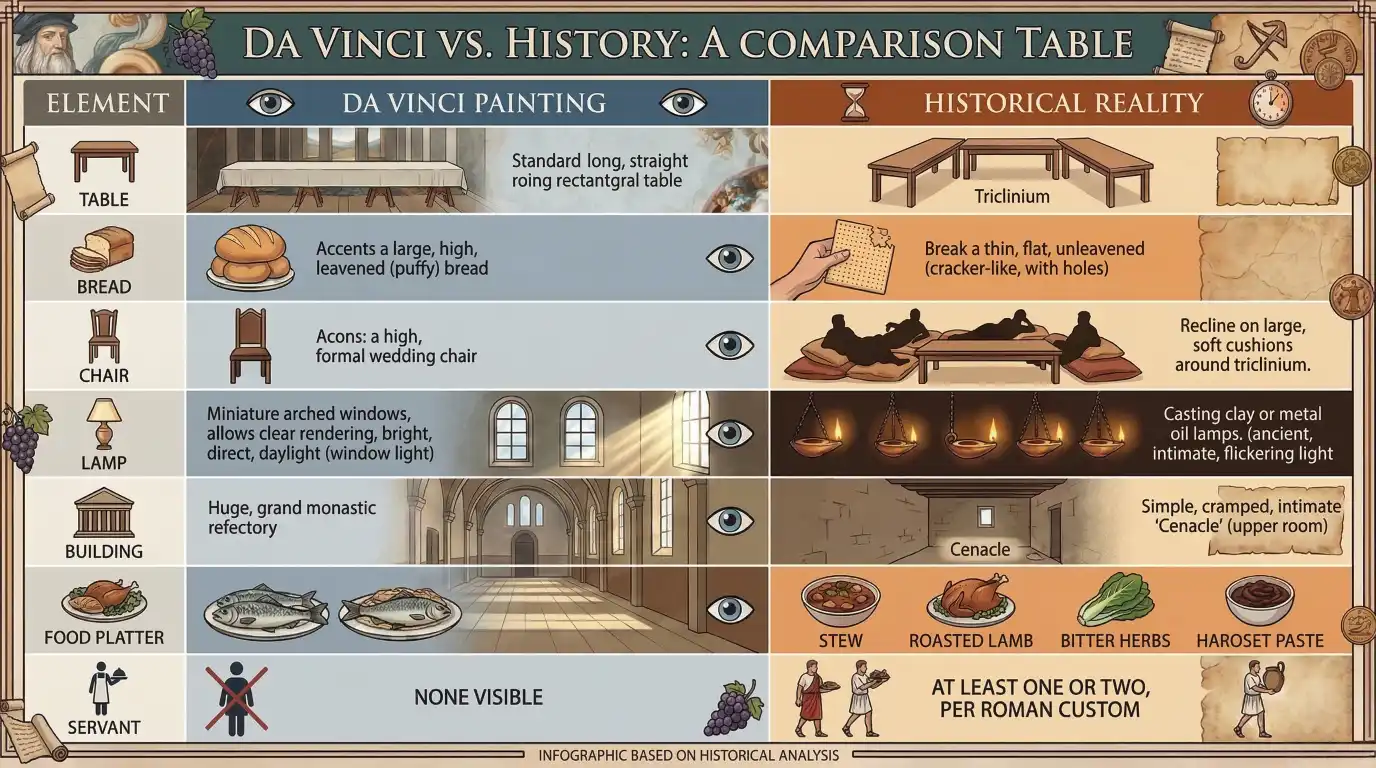
Top 5 Historical Myths
- The apostles sat in a row along one side.
- Judas had a separate plate.
- The meal was served on a long table.
- Jesus used bread with yeast.
- The Cenacle was a grand hall.
Why the Reality Matters
Understanding the actual setting deepens the ritual’s meaning. A humble, communal meal emphasizes equality and service. Recognizing the triclinium underscores the shock of foot washing and the intimacy of Judas’ betrayal. The gritty facts enrich devotion and scholarship alike.
🏺 Fresh Dirt: Jerusalem’s 1st-Century Landscape (2025–2026 Update)
Archaeology in the Holy Land moves fast. If you’re still citing reports from five years ago, your "New Testament" context is already out of date. Between massive new excavations on Mount Scopus and radical redating of Jerusalem’s water systems, 2026 is reshaping how we visualize the city of the Second Temple period.
🏛️ 1. The Purity Industry: New Stone Vessel Factory Found
In February 2026, the Israel Antiquities Authority (IAA) announced the discovery of a massive stone vessel workshop on the eastern slope of Mount Scopus.
- Why it matters: Unlike pottery, stone was considered "immune" to ritual impurity under Jewish Law (Halakha).
- The Insight: This find confirms that the demand for "pure" dining sets—the kind used at the Wedding at Cana or the Last Supper—was an industrial-scale operation. These weren't just luxury items; they were a daily necessity for a city obsessed with holiness.
💧 2. Redating the "Solomon’s Pool" Reservoir
A bombshell report from late 2025 has forced historians to redraw the map of Jerusalem’s water system. New radiocarbon dating on a monumental dam near the Pool of Siloam has shifted its origin back to roughly 800 BCE.
- The Shift: We previously attributed much of this infrastructure to Herod the Great.
- The Impact: This suggests that the 1st-century pilgrims weren't just using "new" Roman tech, but were interacting with massive, ancient Iron Age structures that had been repurposed for centuries.
🍷 3. Re-thinking the Upper Room (Triclinium vs. Stibadium)
While we often picture a long rectangular table, recent analysis of high-status Judean homes reinforces the use of the Triclinium—a U-shaped seating arrangement where guests reclined on their left sides.
Pro-Tip for Researchers: In 2025/2026, scholars are moving away from the "medieval table" imagery and toward the Stibadium (semi-circular) models found in late Roman and early Byzantine contexts. However, for a 1st-century "Upper Room" setting, the traditional Judean Triclinium remains the gold standard for accuracy.
📊 Quick Comparison: Then vs. Now
| Topic | Old View | 2026 Perspective |
|---|---|---|
| Siloam Water | Mostly Herodian construction | Iron Age (King Joash) origins |
| Stone Vessels | Imported or small-scale craft | Large-scale local industrial production |
| Dining Layout | Formal Roman rectangular | Adaptive Judean U-shaped Triclinia |
Source: Compiled from 2025-2026 excavation reports via the Israel Antiquities Authority and the Biblical Archaeology Society.
Conclusion
The Last Supper was not a Renaissance spectacle but a modest, intimate meal. Recognizing the triclinium, menu, seating hierarchy, and cramped upper room reframes the event from myth to history. This clarity doesn't diminish its spiritual power; it magnifies it by rooting it in the daily life of first‑century Judea.
Readers who approach the scene with archaeological eyes gain a richer appreciation for the Gospel narratives and the lived experience of Jesus and his disciples. The next time you see a reproduction of Leonardo’s work, remember the beans, cushions, and oil lamps waiting in the historical record.
Frequently Asked Questions
What did they eat at the Last Supper?
They ate unleavened bread, bean stew (cholent), lamb, olives, bitter herbs (maror), and haroset fruit paste.
Did they sit in chairs during the Last Supper?
No. Guests reclined on cushions around a U‑shaped triclinium; chairs were for servants.
Where did Judas sit at the Last Supper?
Biblical clues place Judas beside Jesus at the inner corner of the triclinium, near John.
Was the Last Supper a Passover meal?
Scholars debate the exact day, but the menu and gospel references align with Passover traditions.
How big was the upper room?
Archaeological estimates put the Cenacle at roughly 4 × 6 meters, enough for a low‑key dinner with a few attendants.
Why does Leonardo’s painting show a long table?
Leonardo prioritized compositional drama and 15th‑century dining conventions, not historical accuracy.
What is a triclinium?
A triclinium is a Roman dining arrangement of three low tables forming a U; diners reclined on cushions.
Who are Dr. Generoso Urciuoli and Marta Berogno?
They are archaeologists who’ve published on 1st‑century Jerusalem pottery and dining practices.